
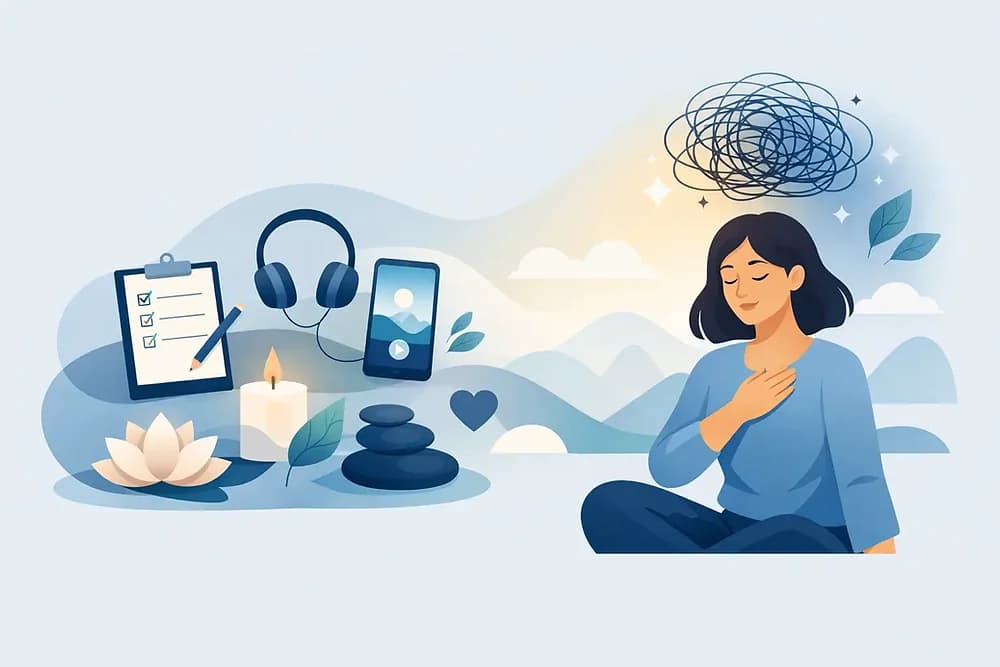
Stress does not always arrive as a single dramatic event. Sometimes it looks like rereading a text message, lying awake with a busy mind, losing patience with someone you love, or feeling tired before the day has truly begun. The best coping tools for emotional stress are not meant to make you ignore what hurts. They create enough steadiness to help you meet difficult feelings with more clarity, kindness, and choice.
Emotional stress can come from work pressure, grief, caregiving, relationship strain, financial concerns, trauma, health changes, or a transition that asks more of you than you expected. Your response may be physical, emotional, or both. You might notice a tight chest, racing thoughts, irritability, numbness, tears, headaches, or a strong desire to withdraw.
There is no single tool that works for every person or every moment. A practice that helps during a stressful meeting may not be the right fit when grief is present. The goal is to build a small, personal set of supports that can meet you where you are.
Start by noticing what your stress is asking for
Before reaching for a coping strategy, pause long enough to name what is happening. Ask yourself: What am I feeling? What is my body doing? What do I need most right now?
Stress often becomes louder when we judge ourselves for having it. Naming an experience can soften that cycle. You might say, “I am overwhelmed,” “I am scared about what happens next,” or “I need a few minutes before I respond.” This is not avoidance. It is a way of giving your nervous system useful information.
Try to distinguish between a problem that needs action and a feeling that needs care. If you missed a deadline, making a brief plan may reduce stress. If you are grieving a loss, a checklist will not remove the pain. You may need rest, space to cry, or a trusted person who can simply sit with you. Often, emotional stress contains both practical and emotional needs.
Best coping tools for emotional stress in the moment
When your body feels activated, complex advice can be hard to use. Choose practices that are simple enough to remember when your thoughts are moving quickly.
Ground yourself through your senses
Grounding brings attention back to the present when anxiety, panic, or overwhelm pulls your mind into the past or future. Look around and quietly identify five things you can see. Notice the feeling of your feet against the floor, the temperature of a drink in your hands, or the sounds closest to you.
You do not need to force yourself to feel calm immediately. The purpose is to remind your body that you are here, in this moment, and that this feeling can be noticed without taking over every part of you.
Use a slower exhale
Your breathing may naturally become shallow or fast when you are stressed. Rather than trying to take a very deep breath, which can feel uncomfortable for some people, try making your exhale slightly longer than your inhale. For example, breathe in gently for a count of three and out for a count of five.
Repeat this for a minute or two without demanding a certain result. If breathwork increases your anxiety or brings up difficult sensations, return to a sensory grounding exercise instead. Coping tools should feel supportive, not like another test to pass.
Create a brief pause before reacting
Emotional stress can make everything feel urgent. A pause helps you respond from your values instead of from the sharpest edge of the moment. Step into another room, take a short walk, wash your hands with warm water, or tell someone, “I want to talk about this when I can be more present.”
A pause is especially helpful in conflict. It is not the same as shutting down or refusing to engage. When possible, name when you will return to the conversation so the other person is not left guessing.
Put thoughts somewhere outside your head
Writing can be a gentle way to reduce mental clutter. Set a timer for five minutes and write without editing. You might begin with, “What feels heaviest right now is…” or “If I could offer myself grace today, it would sound like…”
If journaling feels too open-ended, make two short columns: what is within my control and what is not. This will not solve every concern, but it can reveal one next step and help you loosen your grip on what cannot be resolved today.
Support your nervous system with everyday care
Coping is not only what you do in a difficult moment. It is also the regular care that gives you more capacity before stress peaks. These habits are not a substitute for professional support when you need it, and they are not a promise that life will become easy. They can, however, make a meaningful difference over time.
Sleep, nourishment, movement, and rest are often discussed in ways that can feel unrealistic or shaming. Start smaller. A consistent wind-down cue, such as dimming lights or putting your phone across the room, may be more sustainable than trying to build a perfect bedtime routine. A few minutes of stretching, sitting outside, or walking around the block can offer a shift without requiring a major lifestyle change.
Consider your relationship with information as well. Constant alerts, distressing news, and social comparison can keep your body in a state of alertness. Setting a boundary around when and how you check your phone is not disengaging from the world. It can be a form of protecting your attention and emotional energy.
Gentle structure can help when life feels unmanageable. Choose one essential task, one caring task, and one thing that can wait. The caring task might be a shower, a meal, a call to a friend, or ten quiet minutes without demands. Productivity is not the measure of your worth, especially during a hard season.
Let connection be part of your coping plan
Emotional stress often encourages isolation. You may feel like a burden, worry that others will not understand, or believe you should handle everything alone. Yet safe connection can be one of the most healing supports available.
You do not have to explain your whole story to ask for care. A simple message can be enough: “I am having a difficult week. Could we talk?” You might ask a friend to sit with you, take a walk together, help with a practical task, or check in tomorrow. Being specific can make it easier for someone to show up.
It also matters who you turn to. Not every relationship has the capacity to hold vulnerable feelings well. Look for people who listen without rushing to fix you, respect your boundaries, and leave you feeling more grounded rather than more ashamed.
For some people, faith, cultural traditions, community gatherings, or time in nature offer a meaningful sense of connection. These supports can be deeply restorative when they feel authentic and safe. Your coping plan should reflect your values, identity, and lived experience.
When coping tools are not enough on their own
Self-guided tools are valuable, but they have limits. If stress is persistent, affects your sleep or daily functioning, leads to frequent panic, changes your relationships, or leaves you feeling hopeless, additional support may be needed. Counselling offers a private space to understand what is beneath the stress and to develop strategies that fit your life.
A counselor can help you notice patterns that are hard to see alone, including perfectionism, people-pleasing, unresolved grief, trauma responses, or beliefs that keep you feeling trapped. Therapy is not about being told what to do. It is a respectful partnership that can help you move from survival toward greater peace, balance, and self-trust.
If you are thinking about harming yourself or feel unable to stay safe, seek immediate help through emergency services, a local crisis service, or a trusted person who can stay with you. You deserve support in the moments that feel most difficult.
Stress may not disappear simply because you have learned a few techniques. Still, each time you pause, breathe, reach out, or treat yourself with compassion, you practice a different way of being with hardship. Start with the tool that feels most possible today. Small acts of care can become a steady path back to yourself.