
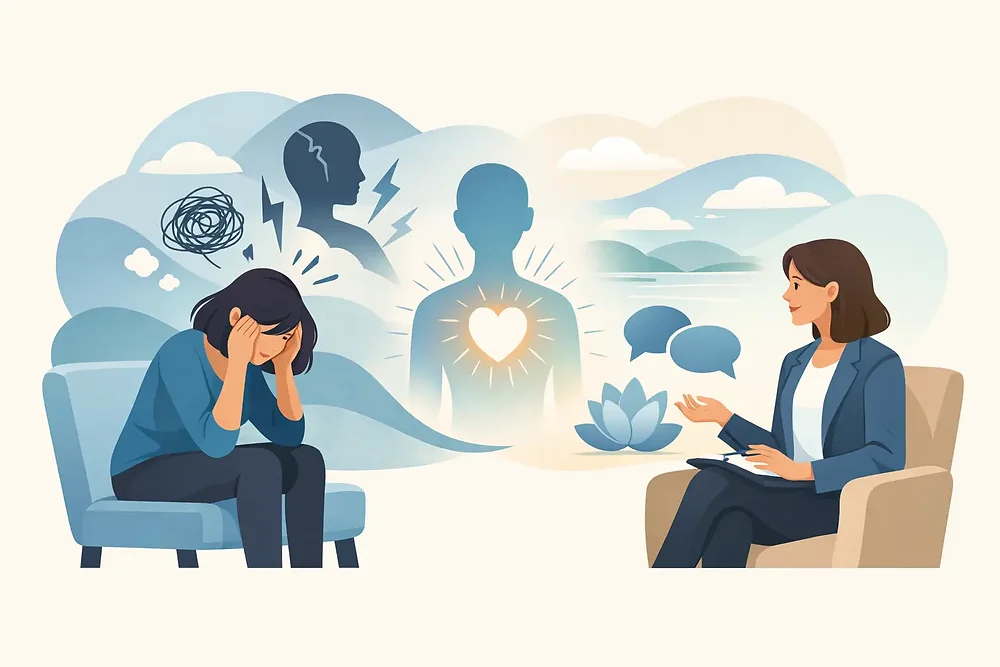
A panic attack can make a normal moment feel suddenly unsafe. Your heart races, your chest tightens, your breathing changes, and your mind may tell you something is terribly wrong. In that state, it is natural to ask, can counselling help panic attacks, or is this something you simply have to endure on your own?
For many people, counselling can help a great deal. Not because it makes anxiety disappear overnight, and not because every approach works the same way for every person, but because panic attacks usually respond well to consistent, thoughtful support. With the right counsellor, therapy can help you understand what is happening in your body, reduce the fear that keeps panic going, and build steadier ways to respond when symptoms show up.
Why panic attacks can feel so overwhelming
Panic attacks are intense episodes of fear that often come on quickly. Some people experience pounding heartbeats, dizziness, trembling, nausea, numbness, sweating, or shortness of breath. Others feel detached from reality or afraid they are losing control. Even when the attack passes in minutes, the fear of having another one can linger for days or weeks.
That fear is often what makes life start to shrink. You may begin avoiding driving, crowded spaces, exercise, work meetings, restaurants, or even being alone. Sometimes people change their routines so gradually that they do not realize how much panic has started to shape their world.
This is one reason counselling matters. Panic is not only about the moment of distress. It is also about the anticipation, the avoidance, and the self-protective habits that form afterward.
Can counselling help panic attacks in a lasting way?
Yes, counselling can help panic attacks in a lasting way, especially when therapy addresses both the physical experience of panic and the patterns that keep it active. A good counselling process does more than offer comfort in the moment. It helps you make sense of what is happening, respond differently, and regain trust in yourself.
For some people, panic attacks are closely tied to chronic stress, unresolved grief, trauma, relationship strain, perfectionism, or a long season of emotional overload. For others, panic seems to arrive out of nowhere and becomes frightening because it feels unpredictable. In either case, counselling creates space to understand the full picture rather than treating symptoms in isolation.
Lasting progress often comes from a combination of insight and practice. Insight helps you identify triggers, beliefs, and patterns. Practice helps you learn how to calm your nervous system, challenge catastrophic thinking, and stay present instead of escalating into fear.
What counselling for panic attacks usually looks like
Therapy for panic attacks is rarely about sitting in a room and being told to relax. Effective counselling is usually much more practical and tailored than that.
Early sessions often focus on understanding your symptoms, history, stressors, and current coping habits. Your counsellor may ask when the panic started, what a typical episode feels like, what you fear might happen during an attack, and whether you have started avoiding certain situations. This assessment matters because panic attacks can look similar on the surface while having very different underlying drivers.
From there, counselling may help you learn how the nervous system works during panic. This psychoeducation can be surprisingly relieving. When you understand that your body is activating a threat response, even when no real danger is present, the sensations can become less mysterious and less powerful.
A counsellor may also teach grounding skills, breathing techniques, body-based calming strategies, and ways to notice spiraling thoughts before they take over. If fear of the symptoms is a major part of the cycle, therapy may focus on helping you relate to those sensations differently so they no longer feel like proof of disaster.
Over time, counselling may also explore the deeper emotional context. Panic is sometimes the loudest expression of stress that has been building quietly for a long time.
How counselling helps break the panic cycle
Panic often follows a pattern. A sensation appears, such as dizziness or a fast heartbeat. Your mind interprets it as dangerous. Fear rises, your body responds with more symptoms, and the whole cycle intensifies. Afterward, you may become hyperaware of your body, watching for any sign that it could happen again.
Counselling helps interrupt this cycle at several points.
First, it can help you notice your triggers. These triggers are not always obvious. They may include lack of sleep, overstimulation, caffeine, conflict, grief, work stress, health anxiety, or memories connected to earlier painful experiences.
Second, counselling can help you change the meaning you assign to symptoms. If every physical sensation feels like a warning sign, panic has more room to grow. Learning to respond with curiosity rather than alarm can lower the intensity over time.
Third, therapy can support gradual re-engagement with avoided situations. Avoidance often brings short-term relief, but it can strengthen panic in the long run. With support, people can slowly rebuild confidence in places and activities that have started to feel unsafe.
Can counselling help panic attacks if trauma is involved?
Yes, but the approach may need to be more careful and paced. Panic attacks are sometimes connected to trauma, even if the connection is not immediately obvious. A person may not think of themselves as traumatized, yet their body still carries unresolved fear, vigilance, or overwhelm.
In those cases, counselling should not rush straight into exposure or symptom management alone. Safety, trust, and stabilization come first. A trauma-informed counsellor will pay attention to your pace, your window of tolerance, and the way your body responds during the process.
This matters because healing from panic is not only about stopping symptoms. Sometimes it is about helping your nervous system experience steadiness again. Gentle, individualized care can make a real difference here.
What type of counselling works best?
There is no single answer for everyone. Cognitive behavioral therapy is often used for panic attacks because it helps identify fearful thought patterns and change responses to physical sensations. For many people, this is highly effective.
At the same time, some clients benefit from approaches that include somatic awareness, mindfulness, trauma-informed therapy, or emotionally focused work. If panic is tied to unresolved pain, relationship stress, or chronic internal pressure, a broader approach may be helpful.
What matters most is not chasing the perfect therapy label. It is finding a counsellor who understands panic, listens carefully, and can tailor support to your needs. A personalized approach is especially important if you are dealing with more than one issue at once, such as anxiety and grief, panic and trauma, or panic and major life change.
When counselling may need added support
Counselling can be very effective, but sometimes it works best alongside other forms of care. If panic attacks are severe, frequent, or connected to medical concerns, it may be wise to speak with a physician as well. Certain health conditions can mimic anxiety symptoms, and ruling those out can bring peace of mind.
Some people also benefit from medication, either short term or longer term, depending on the situation. This is not a failure, and it does not make counselling less valuable. For some, medication creates enough stability to engage in therapy more fully. For others, counselling alone is enough. It depends on the person, the severity of symptoms, and the broader context of their life.
Signs counselling is helping
Progress with panic attacks is not always dramatic at first. Sometimes the earliest signs are subtle. You may notice that symptoms still show up, but they feel less terrifying. You recover more quickly. You stop avoiding as many situations. You understand your triggers better. You begin to feel less ashamed and more hopeful.
These changes matter. Healing is often measured not by never feeling anxious again, but by becoming less ruled by fear.
At Charis Counselling, this kind of work is approached with compassion, patience, and respect for each person’s story. Panic can feel isolating, but you do not have to sort through it alone.
Knowing when to reach out
If panic attacks are affecting your sleep, work, relationships, daily routines, or sense of safety, that is enough reason to seek support. You do not need to wait until things get worse. You also do not need to prove that your distress is serious enough.
Reaching out for counselling is not an overreaction. It is a practical step toward steadiness. With the right support, many people find that panic becomes more understandable, more manageable, and far less controlling than it once seemed.
If you have been quietly asking yourself whether this can get better, that question alone may be worth honoring. Healing often begins there, with one honest moment and the willingness to be met with care.