
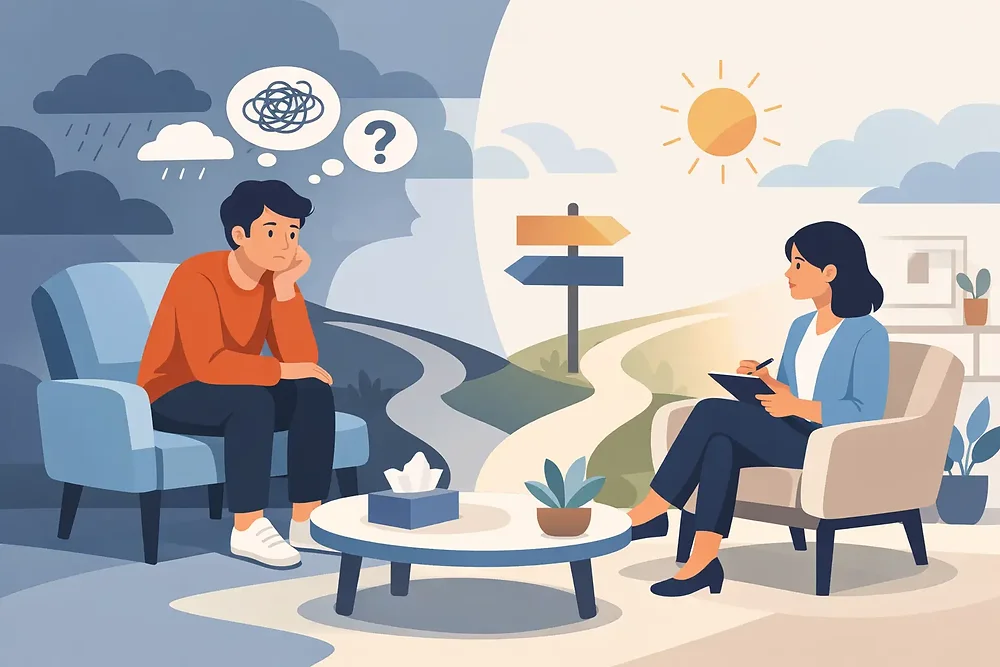
Some people ask this question after a sleepless month. Others ask it after a breakup, a panic attack, a loss, or a quiet realization that they do not feel like themselves anymore. If you have been wondering when to start therapy, the answer is often simpler than people expect: you do not need to wait until life is falling apart.
Therapy is not only for a crisis. It can be a steady, compassionate place to sort through stress, understand patterns, heal from pain, and move toward greater peace. Many people begin counselling long before a situation becomes unmanageable, and that early support can make a meaningful difference.
When should you start therapy? Earlier than you think
A common myth is that therapy is only for people in severe distress. In reality, many people start because something feels off, heavy, or harder than it used to be. They may still be going to work, caring for others, and handling daily life. But underneath, they are exhausted, anxious, stuck, or disconnected.
That is reason enough to reach out.
Therapy can help during acute hardship, but it can also help during seasons of change and uncertainty. If your emotions feel harder to manage, your relationships are strained, or your usual coping tools are no longer enough, those are valid signs that support could be helpful.
Starting earlier often gives you more room to breathe. Instead of waiting for pain to intensify, you can begin with care, clarity, and practical support.
Signs it may be time to begin
There is no single threshold that tells you it is officially time for therapy. More often, it is a pattern. You notice that stress lingers. You feel on edge more often than calm. Small things trigger bigger reactions. Or you keep telling yourself that you should be able to handle it alone, even though it is getting harder.
For some people, the signs are emotional. You may feel persistently sad, irritable, numb, hopeless, or overwhelmed. For others, the signs show up physically through fatigue, sleep problems, tension, or difficulty concentrating. Sometimes the clearest signs appear in relationships. You may be withdrawing, arguing more, feeling deeply lonely, or repeating the same painful dynamics.
It can also be time to start therapy when life looks fine from the outside, but internally, you feel disconnected from yourself. You may be functioning, but not really living with balance or peace.
You do not need a diagnosis
Many people delay therapy because they are not sure their struggle is serious enough. They may think, "I am not in crisis," or "Other people have it worse." That kind of comparison often keeps people suffering longer than necessary.
You do not need a diagnosis to benefit from counselling. You do not need to prove that your pain is severe. If something is weighing on you, shaping your life, or keeping you from feeling grounded, it matters.
Therapy is a place where your experience can be taken seriously without judgment.
Major life changes are a valid reason
Even positive transitions can bring stress, grief, and uncertainty. Starting a new job, becoming a parent, moving, ending a relationship, entering college, caregiving for a loved one, or adjusting to an empty nest can all stir up emotions that are difficult to carry alone.
Therapy during a transition can help you process what is ending, understand what is changing, and move forward with greater steadiness. You do not have to wait until a life change becomes a crisis to seek support.
When waiting can make things harder
Some people know they are struggling, but keep putting therapy off. Sometimes that happens because of fear. Sometimes it is cost, time, stigma, or uncertainty about what therapy will be like. Those concerns are real, and they deserve compassion.
At the same time, waiting can allow painful patterns to deepen. Anxiety can become more consuming. Relationship conflict can become more entrenched. Stress can wear down your body and mind. Feelings you tried to push aside can begin affecting work, sleep, parenting, school, or daily functioning.
This does not mean every problem gets worse without therapy. Some situations do improve with rest, support from loved ones, or changes in circumstance. But if distress is lingering, repeating, or affecting your quality of life, getting help sooner may prevent deeper burnout and discouragement.
What if you are not sure your problem is "big enough"?
That hesitation is more common than you might think. Many people imagine they need a dramatic reason to make an appointment. But therapy is not reserved for extreme situations. It is also for the person who cries more easily than usual, feels tense every Sunday night, cannot stop overthinking conversations, or notices a growing sense of emptiness.
Sometimes the question is not whether your pain is big enough. The better question is whether support could help you live with more clarity, strength, and emotional balance.
If the answer might be yes, that is worth paying attention to.
What therapy can offer in the early stages
Starting therapy before you feel completely overwhelmed can be deeply beneficial. You may have more energy to reflect, practice new tools, and make meaningful changes. Rather than spending all your effort trying to stay afloat, you can use therapy to understand yourself more fully and build healthier patterns.
Early support can help you name what you are experiencing, identify triggers, strengthen boundaries, improve communication, and process emotions before they pile up. It can also reduce the loneliness that often comes with carrying too much by yourself.
For many adults and older teens, one of the greatest gifts of therapy is having a consistent space where they do not need to perform, minimize, or hold everything together.
When should you start therapy for anxiety, grief, or stress?
The answer depends somewhat on the situation, but not as much as people think. If anxiety is interfering with sleep, focus, relationships, or your sense of safety, therapy can help. If grief feels isolating or complicated, therapy can provide support and gentle structure. If stress has become a daily state rather than a temporary season, that is also a meaningful sign.
You do not have to wait for a panic attack, a complete shutdown, or a breaking point. Those moments often bring people to therapy, but they are not the standard you need to meet.
A good time to begin is when you notice that what you are carrying is affecting how you feel, think, relate, or function. Another good time is when you sense that you would simply like support before things get heavier.
There is no perfect moment
Some people delay therapy because they are waiting for life to calm down first. But life is often messy when we most need help. You may never arrive at a perfectly convenient time to begin.
That does not mean you have to force yourself into therapy before you are ready. Readiness matters. The right timing often sits somewhere between avoiding support and expecting perfect conditions. If you are open, curious, and willing to begin, that is often enough.
What to expect if you are starting for the first time
Beginning therapy can feel vulnerable, especially if you are used to handling things on your own. Many first sessions focus on getting to know you, understanding what brings you in, and talking about your goals or concerns. You do not need to tell your whole life story in one visit, and you do not need to have the right words prepared.
A strong counselling relationship should feel respectful, safe, and collaborative. Over time, therapy can help you understand your emotions, notice patterns, and move toward healing with support that is tailored to your situation.
The right fit matters. A counsellor should not feel cold or rushed. You deserve care that meets you with compassion, honours your experiences, and supports your growth in a way that feels personal.
At Charis Counselling, that kind of grace-centred, individualized support is part of what helps clients feel seen rather than reduced to a problem to solve.
A gentle way to decide
If you are still unsure, ask yourself a few honest questions. Has this been weighing on me for longer than I want to admit? Am I coping, or am I barely getting through? Have I been hoping it will pass on its own, even though it keeps returning?
You can also ask a simpler question: Would it help to have a dedicated place to process what I am carrying?
If that question brings even a small sense of relief, it may be time.
Starting therapy is not a sign that you have failed. It is often a sign that you are ready to care for yourself with intention. You are allowed to seek support before things become unbearable, and you are allowed to choose healing while there is still room to breathe.