Online Therapy vs In Person: Which Fits?
- Jul 1
- 5 min read
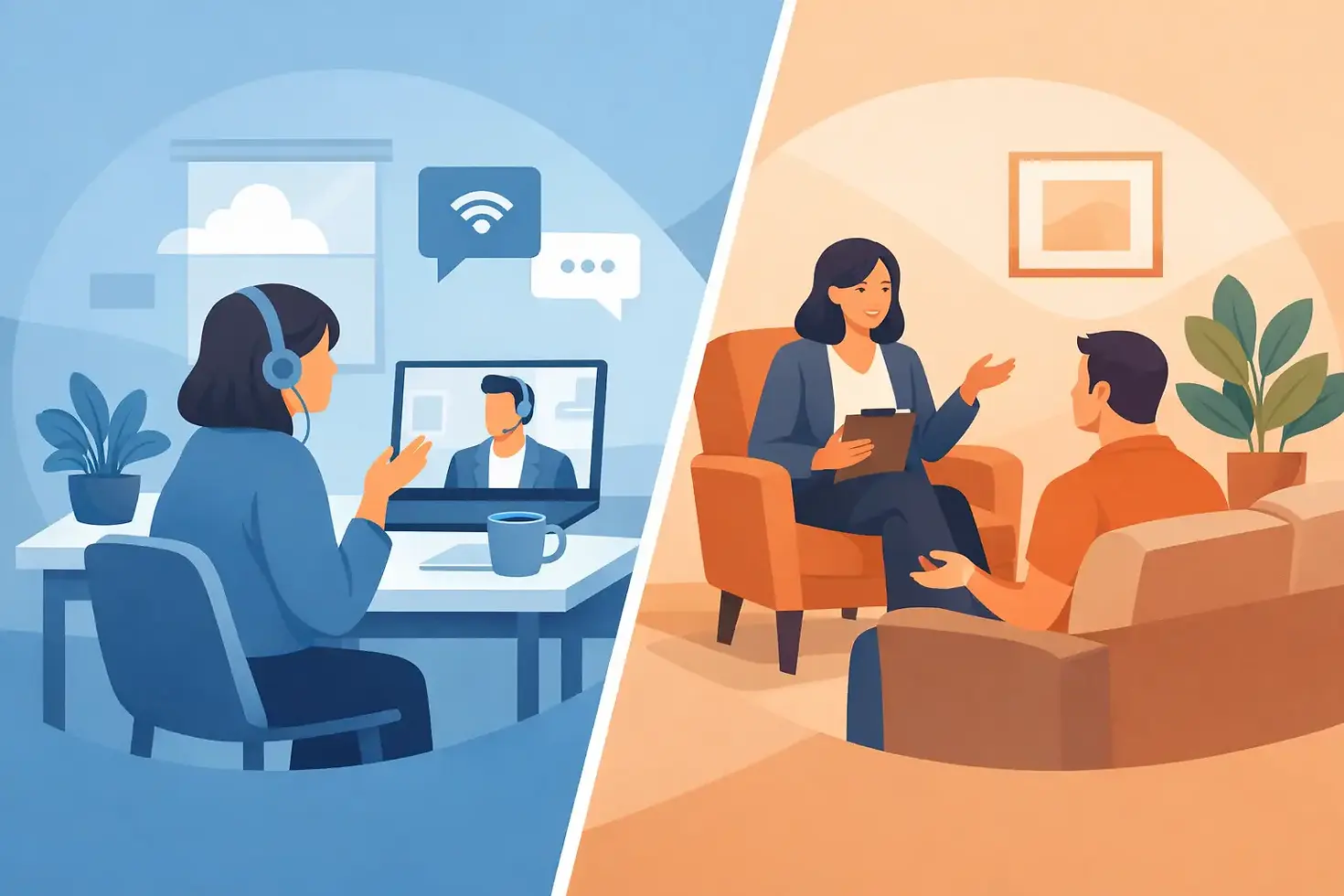
Some people know they need support but get stuck on one question before they ever book a session: should therapy happen through a screen or in an office chair across from someone? When comparing online therapy vs in person care, the best choice is rarely about which format is better overall. It is usually about which setting helps you feel safe enough, steady enough, and supported enough to do honest work.
That choice matters because therapy is not only about techniques. It is also about connection, consistency, and the way your nervous system responds to the space around you. For one person, driving to an office creates a healthy sense of commitment. For another, that same drive adds stress, childcare complications, or one more reason to put healing off for another month.
Online therapy vs in person: what really changes?
At the heart of both formats is the same goal - meaningful, personalized support that helps you move toward greater peace, clarity, and emotional balance. A skilled counselor can help you process anxiety, relationship strain, grief, trauma, or life transitions in either setting. The difference is not whether healing is possible. The difference is how the experience feels and functions in real life.
Online therapy usually happens by secure video, and sometimes by phone. In-person therapy takes place in a shared physical office. That may sound simple, but the setting changes more than logistics. It can affect privacy, body language, comfort, scheduling, emotional openness, and even how likely you are to keep showing up when life feels heavy.
For many clients, the question is less about preference and more about fit. What supports your attention? What lowers barriers? What helps you be present rather than guarded or rushed?
Why online therapy works well for many people
Online therapy has made counseling more accessible for people whose lives are full, unpredictable, or geographically limited. If you work long hours, live far from a provider, manage chronic illness, or care for children or aging parents, virtual sessions can remove practical obstacles that might otherwise keep therapy out of reach.
There is also a certain comfort in being in your own space. Some people open up more easily from home because the environment feels familiar. You may have your own blanket, your own tea, and a quieter transition after the session ends. Instead of walking back into a waiting room, you may be able to sit for a few minutes and breathe.
Online sessions can also support consistency. If weather is bad, your schedule shifts, or you are traveling within your state, you may still be able to keep your appointment. That steadiness matters. Growth in counseling often comes through regular attendance and a relationship that builds over time.
Still, online therapy is not automatically easier for everyone. Privacy can be a real issue if you live with family, roommates, or a partner and do not have a confidential place to talk. Technology problems can interrupt emotional moments. Some clients also find it tiring to focus on a screen, especially after a full workday online.
When in-person counseling may feel better
In-person counseling offers something many people still deeply value: the felt experience of sharing a room with a compassionate, grounded professional. There is often a sense of containment in that physical setting. You arrive, settle in, and step into a space designed for reflection.
For clients who feel distracted at home, an office can create emotional focus. It separates therapy from everyday demands. Laundry is not in the next room. Your phone is easier to put away. The session can feel more intentional simply because you traveled somewhere to be there.
Some people also feel more connected face to face. A counselor can notice subtle shifts in posture, breathing, and expression more easily in person. While strong therapeutic relationships absolutely happen online, there are moments when physical presence supports a fuller sense of attunement and safety.
In-person sessions may be especially helpful for clients who want stronger boundaries between therapy and home life, who struggle to find private space, or who simply know that being physically present helps them engage more deeply. For some, that ritual of coming into the office becomes part of the healing itself.
That said, in-person counseling has trade-offs too. Commutes, transportation costs, work schedules, illness, mobility concerns, and weather can all make attendance harder. If getting to the office feels like a major burden, even excellent care can become difficult to sustain.
Which is better for anxiety, stress, or relationship issues?
There is no universal rule. Many concerns can be treated effectively in either format, including anxiety, depression, stress, burnout, grief, and relational challenges. What matters most is whether the format helps you participate honestly and consistently.
For anxiety, online therapy can be a gentle starting point. If leaving the house, navigating traffic, or entering a new office feels overwhelming, virtual care may lower the threshold enough to begin. On the other hand, if home is where your stress is concentrated, stepping into an in-person setting may feel calmer and more supportive.
For relationship concerns, either option can work well depending on schedules, comfort, and communication style. Some couples or individuals appreciate the convenience of joining online. Others prefer the grounded structure of meeting in person, especially when emotions run high and body language matters.
For trauma, the answer is especially personal. Some clients feel safer in their own environment, where they have control over comfort and surroundings. Others feel safer in a professional office that offers distance from triggering spaces or relationships. This is one area where it helps to talk openly with a counselor about your history, your nervous system, and what helps you feel anchored.
Questions to ask yourself before choosing
Instead of asking which format is best in general, try asking which format best supports you right now. That may change over time, and that is okay.
Think about privacy first. Can you speak freely at home without being overheard? If not, in-person sessions may provide relief. Next, consider energy. Will a commute drain you, or would leaving the house actually help you reset? Then consider focus. Are you likely to stay present on video, or do screens make you restless and detached?
It also helps to think about emotional safety. Where do you feel more able to be vulnerable? Some people cry more easily in their own living room. Others only let themselves soften when they are in a neutral, protected office.
Finally, look at consistency. The best therapy format is often the one you can realistically maintain. A good plan that fits your actual life is more helpful than an ideal plan you cancel every other week.
Online therapy vs in person is not always a permanent choice
One of the most reassuring truths about this decision is that you do not have to get it perfect from the start. Many clients begin with one format and later realize another would serve them better. Some start online because it feels more manageable, then move to in-person care when they want a stronger sense of presence. Others begin in office and later switch to virtual sessions when work, parenting, health, or travel make flexibility essential.
What matters is staying responsive to your needs rather than judging yourself for having them. Counseling works best when the process is shaped around real life with honesty and grace. At Charis Counselling, that kind of personalized care matters because no two healing journeys look exactly the same.
A thoughtful counselor will not treat this as a minor technical detail. They will help you consider how the format affects comfort, privacy, regulation, and follow-through. Sometimes the right answer is clear immediately. Sometimes it takes a few sessions to know.
If you are hesitating to start because you are still weighing online therapy vs in person, this may be the gentlest place to begin: choose the option that feels most doable, not the one that seems most impressive. Healing often begins with one steady yes. The most important step is not choosing the perfect format. It is giving yourself permission to be supported in a way that meets you with compassion, practicality, and care.